 Jaba Learning
Why Science Is Beautiful
October 10, 2026 · 5 min read
I've always thought human beings were lucky. Not only did we win the evolutionary jackpot by developing a brain with a sense of self, that brain came endowed with an innate curiosity. Our first inkling of self-awareness as toddlers might be the question: Why?
Science is the culmination and codification of this innate part of ourselves. Think about it. Not only did we invent a playground that encourages us to imagine the outrageous, the impossible, the fantastical (Einstein's famous "thought experiments"), but that invention comes paired with a strict process for testing those imaginings, discarding the ones that fail, and elevating the survivors into theories that explain how nature works.
We have successfully used our existence to formulate a workflow:
Why? → imagination → supposition → observation → codification → enlightenment
After all, that is arguably the purpose of science: enlightenment.
Sometimes the science someone engages in might seem to be deep in the weeds. Not every why leads to enlightenment that changes all of humanity the way Galileo, Newton and Einstein did. Sometimes that science is only relevant to, and noticed by, someone else who uses it as a given in their own quest for truth.
I am not a scientist. I do no research to prove any hypotheses. But I am in love with science. I am enthralled with our human endeavor to push our understanding, our enlightenment, further than yesterday. If I could spend a single day orbiting close to Gargantua, the black hole from Interstellar, where every hour costs seven years on Earth, and return 168 years in the future to learn what will be discovered beyond my lifetime, I would. I am joking... maybe.
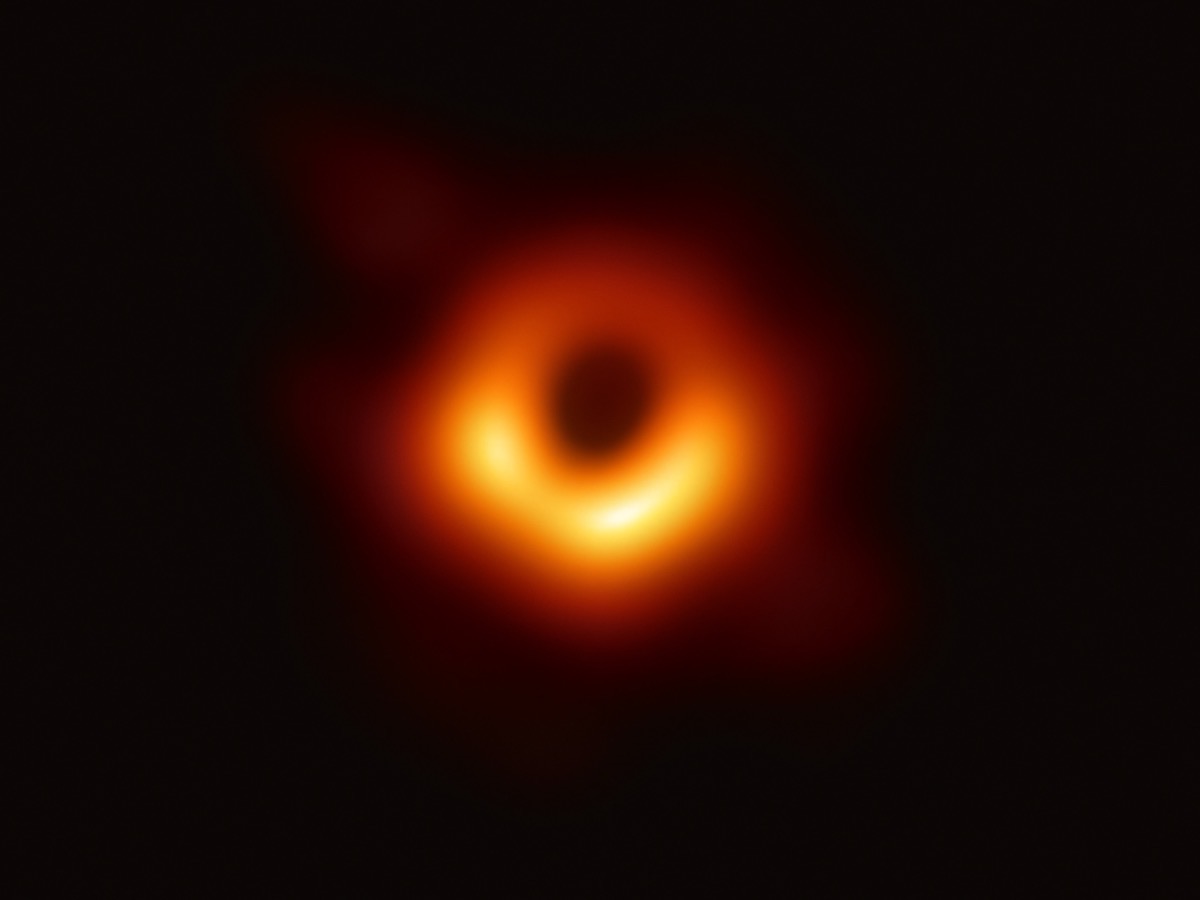
Gargantua is fiction, but real black holes are no longer beyond our sight. In 2019, our collective efforts as a species held up a handful of us to construct a global telescope and capture the first image of a supermassive black hole, at the center of the galaxy M87. Think about that for a second. We have barely touched the surface of the Moon, yet we have pictures of something so far away that, even traveling at the speed of light, a person would need 55 million years to reach it.
Science doesn't just provide photographic enlightenment. Sometimes it saves lives. As the world shut down a year later during the COVID-19 pandemic, the science Katalin Karikó and Drew Weissman engaged in to develop a brand-new technology, the mRNA vaccine, made it possible to produce a vaccine within a year. Unfortunately, many people died worldwide. But without science, how many more would have died? One study estimates that in their first year alone, COVID-19 vaccines prevented about 14 million deaths.
Few things have encouraged my imagination to run wild with "what if" questions more than watching Star Trek: The Next Generation. What if its warp drive is possible? What if one day kids in school learn about warp travel as something elementary, the way the basics of relativity are now taught in high school physics? The same thing that took one of humanity's geniuses to figure out is now required reading in a classroom.
Imagine: one day we explain to high school students that warp drive is simply a series of continuous navigational jumps through short wormholes, guided by laser line of sight. Your intrepid spaceship fires a laser, then projects energy to a point on that laser's path one light-second away, forming a wormhole exit. The ship slips through and covers 300,000 kilometers, the distance light travels in a full second, in an instant. Then it does it again, and again, and again. It never travels faster than light. It just skips the distance. A distinction with a non-relativity-breaking difference.
Why? → enlightenment. The best of our minds ask the whys and stretch their imaginations, and the rest of us benefit from the enlightenment. The perfect division of labor, not dissimilar to a colony of ants. A single scout wanders off into the unknown, stumbles onto something wonderful, and lays down a trail. Before long the whole colony is marching along it, carrying home what one curious ant found. Galileo, Newton and Einstein were our scouts. Every classroom is the trail. What we found was enlightenment.
I wonder what their equivalent of science is. What do ants find beautiful?